Archery Circles in Paris Public Squares Develop Mental Focus Techniques for Suburban Youth in Basketball and Swimming Programs
Otto Hughes · Oct 14, 2026
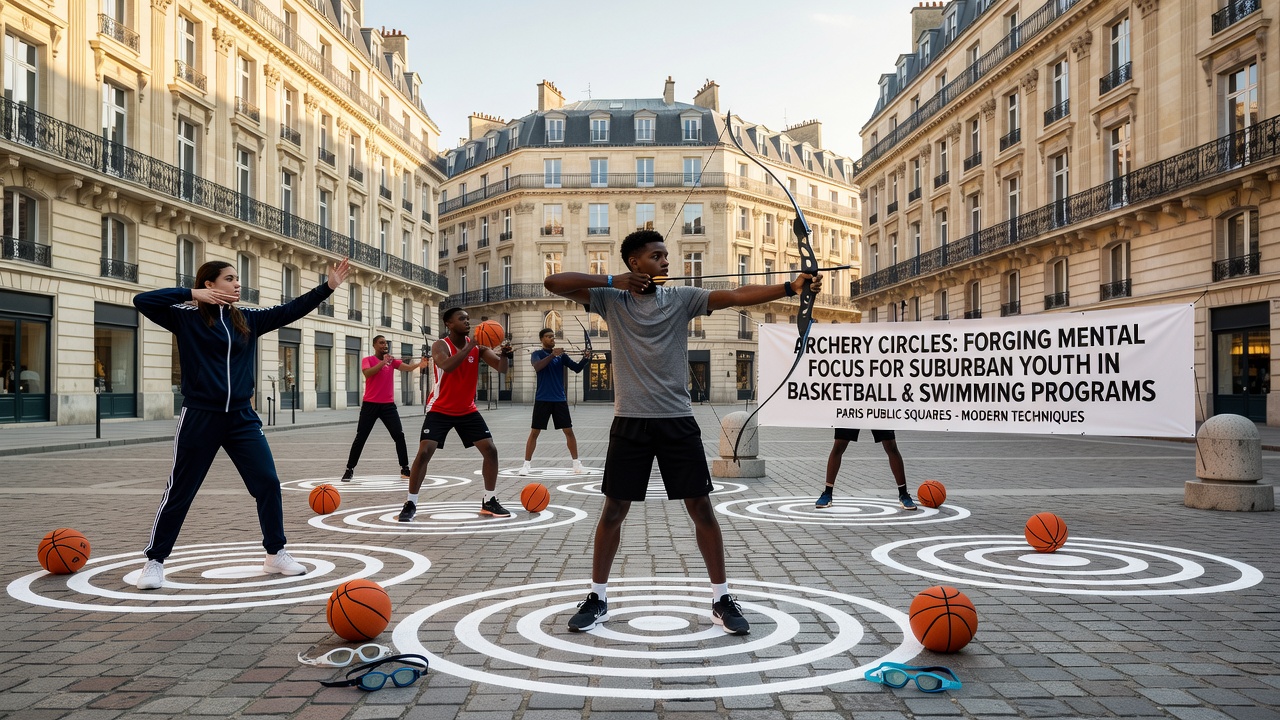
Archery Circles in Paris Public Squares Develop Mental Focus Techniques for Suburban Youth in Basketball and Swimming Programs
Archery circles have taken root in several Paris public squares where instructors lead sessions that emphasize breath control, target visualization, and steady posture, and these methods transfer directly to suburban youth enrolled in basketball and swimming programs across the greater metropolitan area. Participants from communities outside central Paris arrive by regional transit lines each week to join groups that meet in locations such as Place de la Bastille and Square du Temple, while coaches document improvements in attention span and decision-making speed once athletes return to their primary sports.
Program Structure and Daily Operations
Each circle operates on a fixed schedule with groups of twelve to fifteen athletes aged twelve to eighteen, and sessions last ninety minutes during which participants alternate between drawing arrows and performing silent focus drills adapted from competitive shooting protocols. Instructors begin with alignment checks and then progress to timed sequences that require athletes to hold aim while counting heartbeats, a technique that mirrors the pause swimmers use before a dive or the reset basketball players apply at the free-throw line. Data collected by the City of Paris Sports Department shows that over four hundred suburban youths participated in these circles during the 2025 season, with attendance records indicating consistent turnout from departments 93, 94, and 95.
Coaches integrate simple biofeedback tools such as pulse monitors clipped to earlobes, and readings guide adjustments in stance that later carry over to poolside breathing routines and court-side composure under pressure. One documented pathway sends swimmers from the same circles into specialized clinics at the Georges Vallerey pool where they replicate the same pre-shot visualization sequence before starts, whereas basketball academies in Seine-Saint-Denis incorporate the same four-count hold pattern during half-time strategy huddles.
Transfer of Techniques to Basketball and Swimming
Archery instructors teach a three-phase routine that includes preparation, execution, and recovery, and basketball coaches have adapted the preparation phase into pre-game routines that reduce turnover rates in youth leagues tracked by the French Basketball Federation. Swimmers apply the recovery phase as a post-turn relaxation method that shortens surface time between laps, according to timing sheets maintained by regional aquatic centers. Studies conducted by the French National Institute of Sport, Expertise and Performance track athletes who combine archery focus work with their main sport and report measurable gains in sustained attention during competitions held between March and July each year.
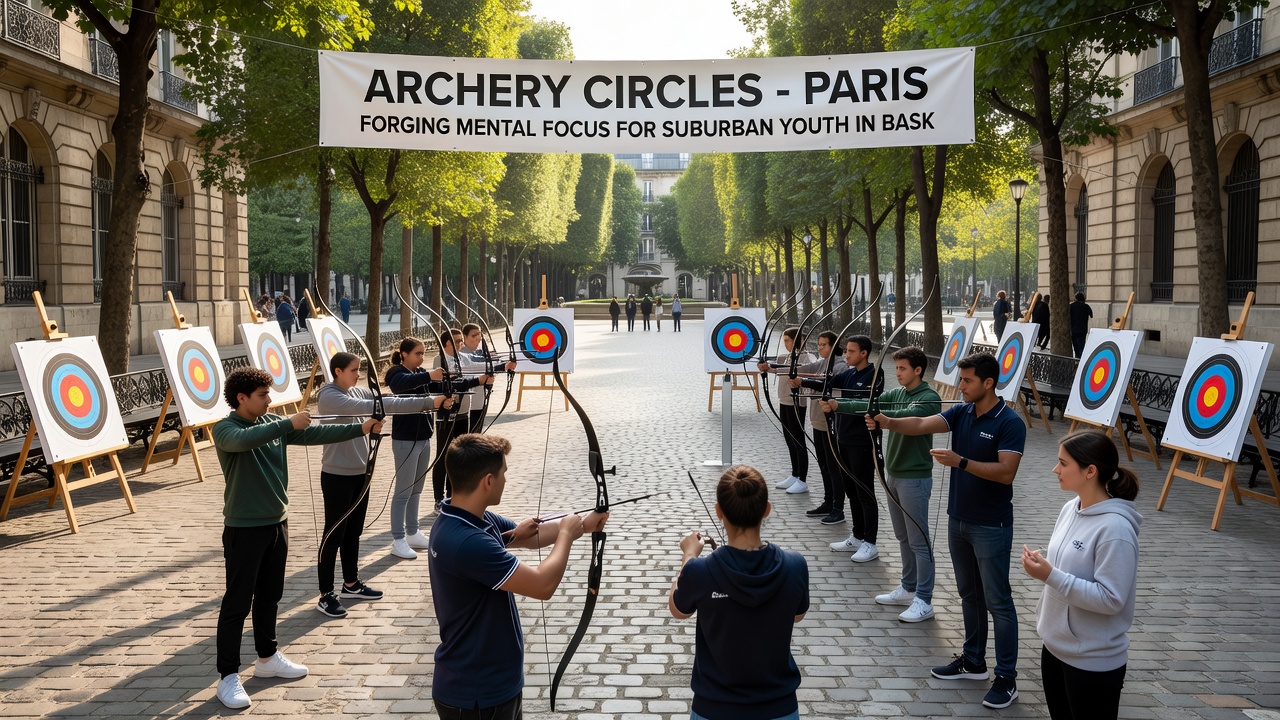
Transportation subsidies provided through municipal partnerships allow groups from outer suburbs to reach central squares without added cost, and these arrangements have expanded the reach of the circles to include participants from more than twenty-five different secondary schools. In October 2026 the program will introduce evening sessions under portable lighting at three additional squares to accommodate school schedules that shift after the start of the academic year, and organizers expect another two hundred athletes to join during that expansion window.
Supporting Research and Broader Context
Research from the University of Queensland Centre for Sport and Exercise Sciences examined similar cross-training models and found that precision-based activities such as archery improve working memory capacity in adolescents when practiced twice weekly over an eight-week period. French regional sports authorities reference these findings when allocating equipment budgets that cover bows, targets, and safety mats distributed across the current Paris sites. Partnerships with local swimming clubs and basketball academies ensure that progress metrics from archery circles feed into season reports shared with parents and school counselors.
Equipment standardization follows guidelines issued by the French Archery Federation, which certifies instructors and maintains liability coverage for all public-square events. Attendance logs compiled over the past two seasons reveal higher retention rates among athletes who attend at least twelve sessions, and those same athletes show improved split times in swimming events and higher free-throw percentages in basketball games tracked by league statisticians.
Conclusion
Archery circles continue to operate as structured entry points that deliver transferable mental skills to suburban youth already committed to basketball and swimming pathways, and municipal records indicate steady growth in participation numbers through the end of 2026. The integration of focus protocols across disciplines remains documented in federation reports and institute studies that track performance indicators without requiring athletes to abandon their primary sports.