Olympic Legacy Sites Doubling as Multi-Sport Training Nodes for Suburban Football and Tennis Pathways
Wendy Schmidt · Sep 30, 2026
Olympic Legacy Sites Doubling as Multi-Sport Training Nodes for Suburban Football and Tennis Pathways
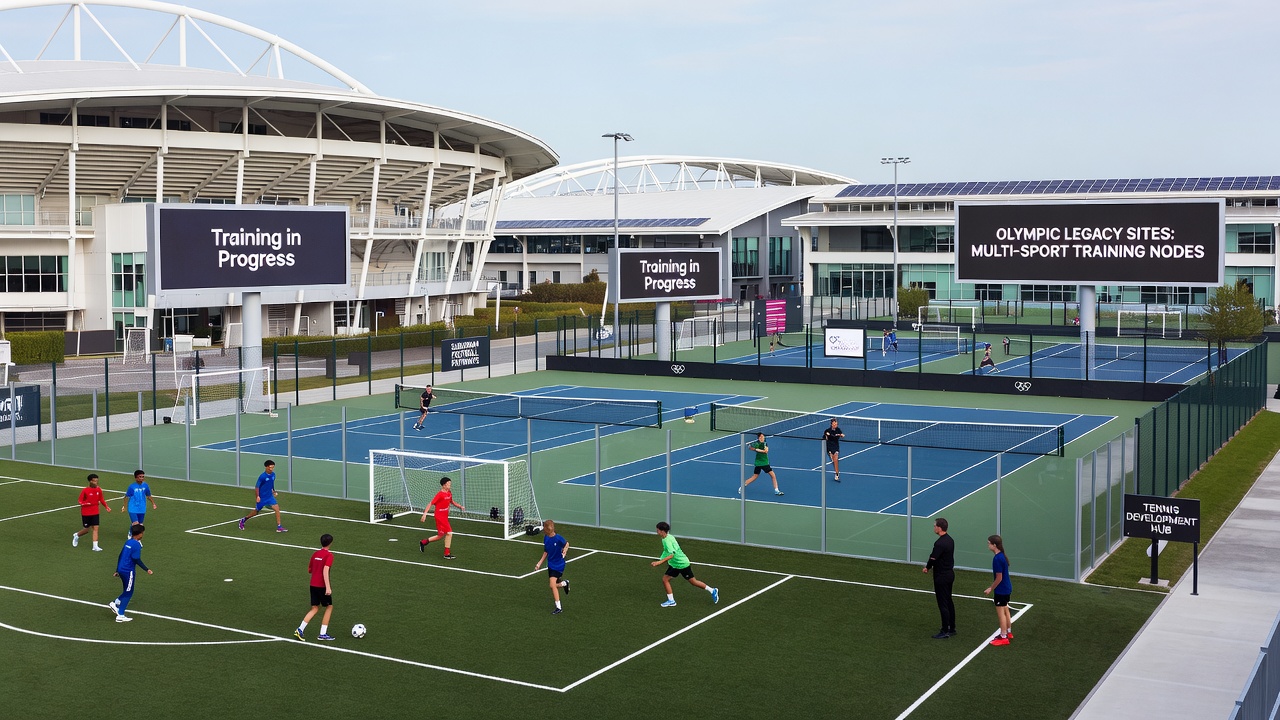
Former Olympic venues across the Paris region have transitioned into permanent training facilities that support football and tennis development in suburban communities, with data from regional sports authorities showing increased participation rates among youth aged 8 to 18 since the 2024 Games concluded. These sites, once built for elite competition, now operate as shared nodes where local clubs coordinate schedules for pitch-based football drills alongside court-based tennis pathways, allowing athletes to alternate between the two disciplines within a single session.
Repurposing Olympic Infrastructure for Dual-Sport Use
Venues such as those in Seine-Saint-Denis and surrounding suburbs underwent modifications that preserved core Olympic structures while adding modular training zones, and observers note that this approach has enabled year-round access without the need for new construction. Government records indicate that facilities originally designed for track and field events now incorporate dedicated football pitches alongside tennis courts, creating environments where coaches from multiple clubs can run parallel programs. Researchers at institutions including the Australian Institute of Sport have tracked similar legacy conversions worldwide and found that multi-use configurations reduce operational costs by up to 30 percent compared with single-sport sites.
Suburban football academies have integrated these locations into their weekly timetables, scheduling technical sessions on adapted grass surfaces that accommodate both small-sided games and endurance circuits, while tennis federations use adjacent courts for footwork drills that complement the movement patterns required in football. This overlap supports pathways where athletes progress from introductory multi-sport groups into specialized academies, with enrollment figures from the French Ministry of Sports showing steady growth in combined registrations through 2025.
Football Pathway Integration at Legacy Nodes
Coaches at suburban clubs report that legacy sites allow for larger training groups because the original Olympic-scale infrastructure provides ample space for position-specific drills and tactical work, and this capacity has proven particularly useful during peak seasons when indoor alternatives remain limited. Data compiled by regional governing bodies shows that youth teams using these nodes complete an average of four additional training hours per week compared with clubs relying solely on municipal pitches. Programs often pair football fundamentals with tennis-derived agility exercises, creating sessions that rotate between the two surfaces to maintain engagement and reduce overuse injuries.
One documented case involves a Seine-Saint-Denis academy that relocated its under-14 squad to a converted Olympic training hall, where the group now shares facilities with a local tennis development program three afternoons each week. Schedules align so that football players finish pitch work and transition directly to court-based reaction drills, while tennis participants gain exposure to team-based movement patterns. Attendance logs maintained by the clubs indicate consistent participation across both sports, with some athletes advancing to regional selections in their primary discipline.
Tennis Development Within the Same Framework
Tennis pathways at these nodes emphasize technical repetition on surfaces that mirror competition standards, yet the proximity to football facilities encourages cross-training elements such as balance and lateral movement that translate across disciplines. National tennis organizations have issued guidelines recommending legacy venues for suburban programs because the infrastructure supports high-volume ball striking without the scheduling constraints typical of public courts. Figures released by the European Tennis Federation reveal that suburban academies accessing Olympic legacy sites recorded a 22 percent rise in junior tournament entries between 2024 and 2025.
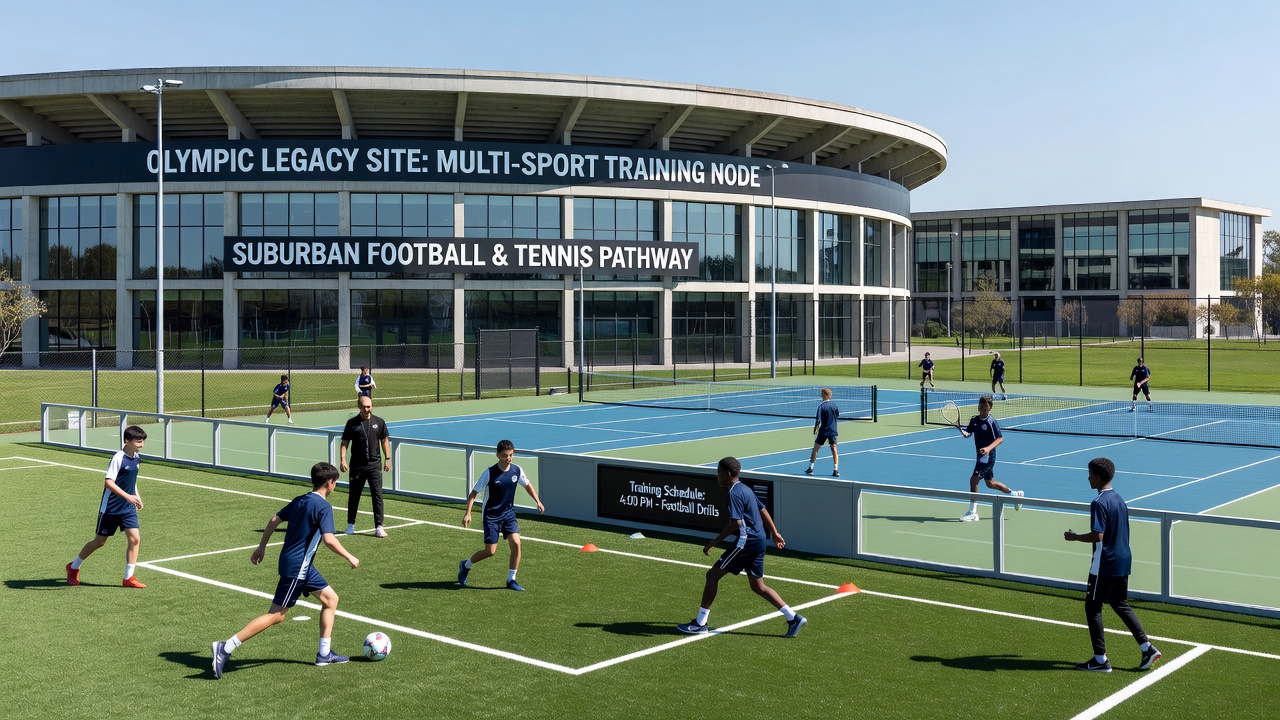
Coaches coordinate equipment sharing and recovery protocols across both sports, allowing tennis players to utilize football-specific conditioning areas during off-court periods. This arrangement has streamlined logistics for families in outer suburbs, where travel time between separate venues previously limited multi-sport involvement. Studies from the Canadian Sport Institute Pacific have examined comparable models and noted improved retention rates when athletes maintain access to varied training environments within a single location.
September 2026 Programming and Expansion Plans
Regional authorities have scheduled expanded operating hours at several legacy nodes beginning in September 2026, aligning with the start of the new academic year and the launch of additional evening sessions for working parents. Updated timetables will incorporate structured pathways that guide participants from introductory multi-sport blocks into focused football or tennis tracks, supported by data dashboards that track progression metrics across both disciplines. Partnerships between local clubs and national federations aim to formalize these routes, ensuring that athletes who demonstrate aptitude in either sport receive targeted development opportunities.
Funding allocations announced by the Île-de-France regional council include provisions for maintenance upgrades and coaching certification programs tied directly to these sites. Observers expect the September 2026 rollout to increase weekly user capacity by approximately 15 percent, based on pilot data collected during the preceding summer period. External evaluations from bodies such as the International Olympic Committee continue to monitor how these adaptations influence long-term athlete development across suburban populations.
Conclusion
Legacy sites from the Paris Games have become established components of suburban sports infrastructure, providing integrated training environments that serve both football and tennis pathways without requiring separate facilities for each discipline. Participation statistics, scheduling records, and cross-sport program designs illustrate how these venues support consistent access and skill development for youth in surrounding communities. Continued coordination among clubs, federations, and regional bodies will determine how effectively these nodes sustain multi-sport participation through the 2026 expansion and beyond.