Parisian Climbing Centers Develop Grip Endurance Vital for Young Fencers Transitioning into Regional Handball Squads
Wendy Schmidt · Oct 28, 2026
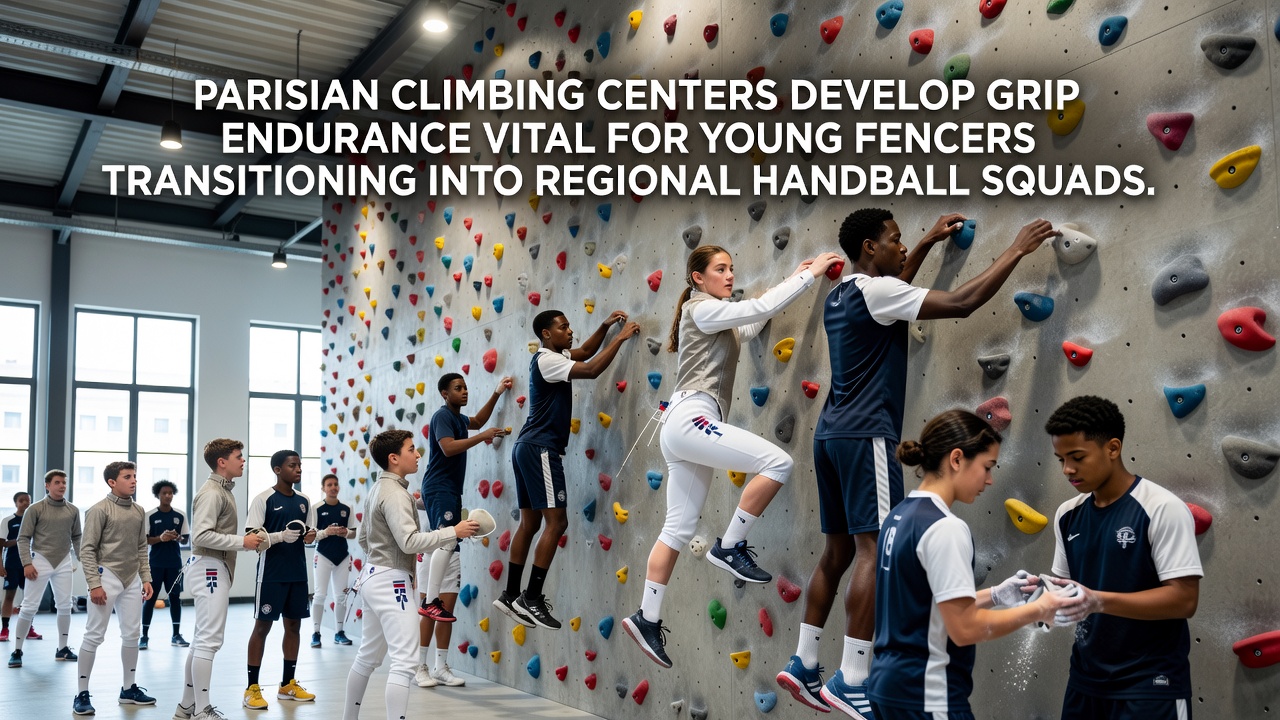
Parisian Climbing Centers Develop Grip Endurance Vital for Young Fencers Transitioning into Regional Handball Squads
Parisian climbing centers have expanded specialized sessions that target grip endurance, a physical attribute shared across fencing, climbing, and handball, and these programs now serve as structured bridges for athletes moving between the sports. Young fencers in the city often begin supplementary climbing work around age twelve, building the forearm stamina required to maintain weapon control during extended bouts, while the same capacity later supports sustained ball handling and throwing accuracy when they enter regional handball squads. Data from French youth sports federations show steady increases in multi-sport participation rates between 2023 and 2025, with climbing listed as one of the fastest-growing cross-training options in the Île-de-France region.
Shared Physical Demands Across Disciplines
Fencers rely on prolonged isometric contractions in the fingers and wrists to keep blades steady under fatigue, and handball players apply comparable force when catching high-velocity passes or executing powerful shots. Climbing routes replicate both demands through sustained holds that last between thirty and ninety seconds, allowing athletes to train the exact muscle groups without the full technical load of either sport. Researchers at the Australian Institute of Sport have documented how grip endurance protocols improve performance metrics in overhead throwing sports, and similar findings appear in European studies tracking youth fencers who add climbing twice weekly.
Facility Growth and Program Design in Paris
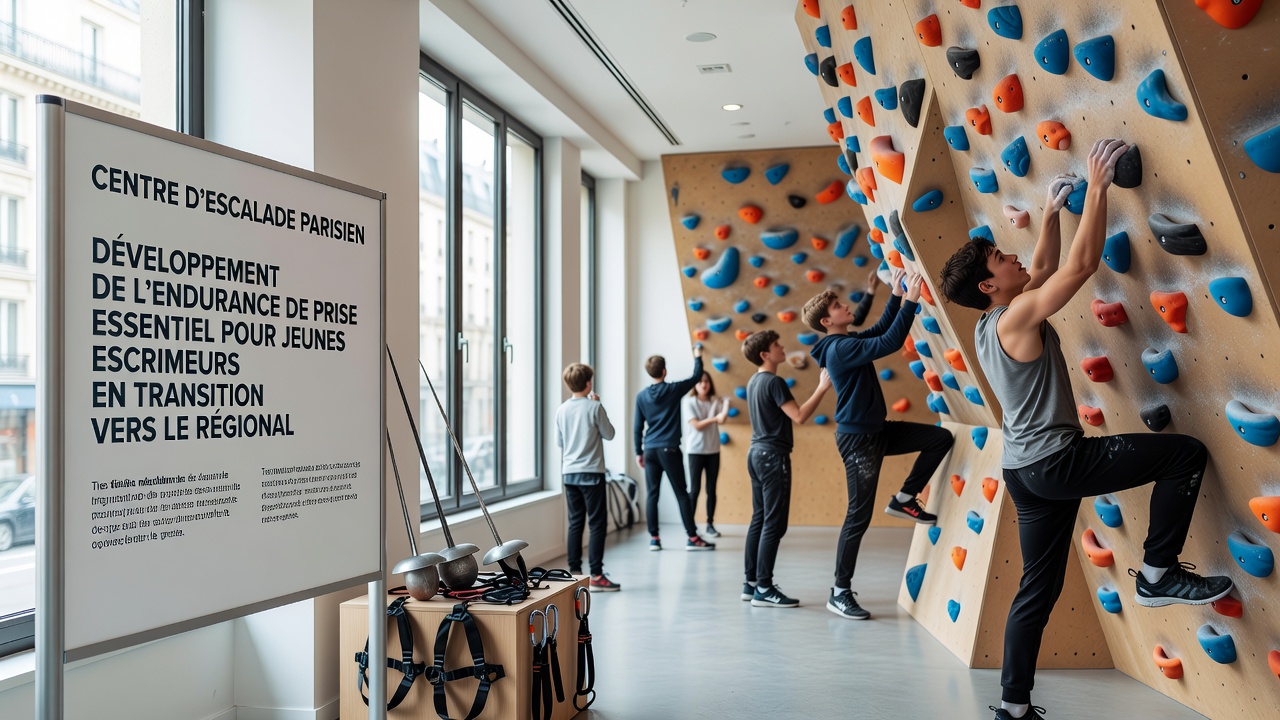
Climbing gyms across Paris, including those in the 13th, 18th, and 20th arrondissements, now schedule dedicated youth blocks that combine bouldering circuits with hangboard intervals calibrated for athletes under eighteen. These sessions run year-round, yet October 2026 marks the launch of an additional pathway initiative coordinated with regional handball leagues, allowing fencers who complete a six-month climbing block to receive direct evaluation from handball scouts. Sessions emphasize progressive overload, starting with large holds and moving to smaller edges while athletes maintain heart rates between 140 and 160 beats per minute, a range that mirrors competition intensity in both fencing and handball.
Coaches track progress through standardized tests such as the twenty-second hang duration on a 20-millimeter edge and the number of consecutive pull-ups performed after a climbing circuit. Figures released by the Paris regional sports authority indicate that participants who maintain these metrics for three consecutive months show measurable gains in fencing lunge accuracy and handball passing consistency once they shift focus to their primary sport.
Transition Pathways and Athlete Monitoring
Transition programs operate through partnerships between fencing clubs, climbing centers, and handball academies, with shared databases that log training loads and recovery markers. Athletes typically spend one full season in climbing before entering handball trials, during which time their fencing competition schedule remains unchanged. Observers note that the added volume improves overall resilience, reducing the incidence of wrist and elbow complaints that commonly appear when young athletes increase throwing volume abruptly. The World Health Organization guidelines on youth physical activity recommend varied loading patterns across multiple movement types, and Parisian centers apply these principles by alternating climbing days with fencing technique work and light handball skill introduction.
October 2026 Developments
In October 2026 several centers will introduce evening sessions timed around school schedules, allowing athletes to complete climbing blocks before standard fencing training begins at 7 p.m. Regional handball squads plan to attend two open evaluation days that month, selecting participants based on grip test results combined with movement efficiency observed during climbing. This calendar alignment reflects broader efforts by French sports bodies to create clearer multi-sport routes ahead of national youth competitions scheduled for early 2027.
Conclusion
Parisian climbing centers therefore function as practical intermediaries that develop grip endurance transferable to both fencing performance and handball demands, supported by measurable testing protocols and coordinated scheduling with regional squads. Continued expansion of these programs through 2026 and beyond depends on sustained collaboration among facilities, coaches, and governing bodies that already track participation and performance data across the three disciplines.