Paris's Underground Fitness Scene: How Historic Metro Stations Double as Training Hubs for Aspiring Footballers and Runners
Wendy Schmidt · Aug 24, 2026
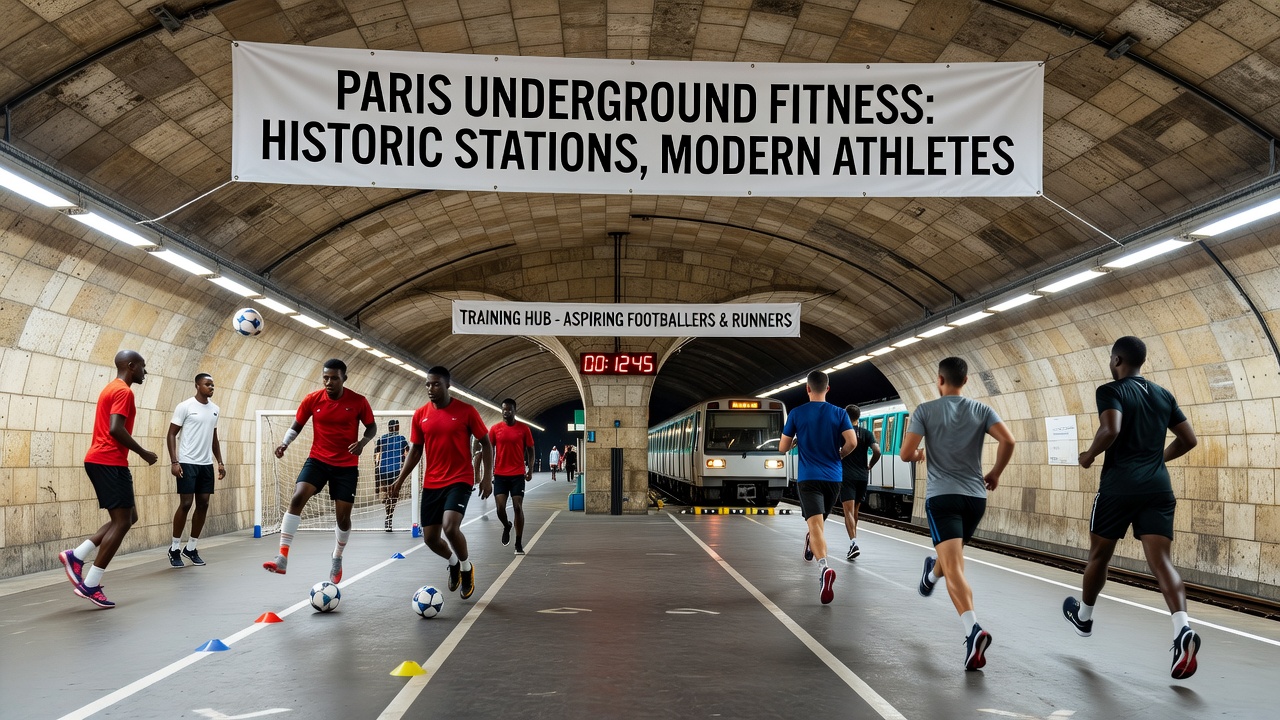
Paris's Underground Fitness Scene: How Historic Metro Stations Double as Training Hubs for Aspiring Footballers and Runners
Paris metro stations built in the early twentieth century have taken on new roles as fitness facilities where aspiring footballers and runners conduct structured workouts on disused platforms and tunnels. City records show that several stations closed to passenger service since the 1930s now operate under permits issued by the RATP and the Paris municipal sports department, with sessions scheduled between 6 a.m. and 10 a.m. on weekdays.
Origins of the Underground Training Model
Urban planners first proposed adaptive reuse of dormant metro infrastructure in 2018 when the Île-de-France region published data indicating limited green space per resident in central arrondissements. Engineers assessed structural integrity of stations such as Saint-Martin and Croix-Rouge, confirming that platform widths could accommodate sprint lanes and small-sided football pitches while preserving original tiling and signage for heritage compliance. By 2021 the first licensed programs began, and participation numbers reported by the Paris Athletics League reached 1,200 registered athletes across six locations.
Training Protocols for Footballers
Football academies affiliated with clubs in the Paris region book blocks of time for technical drills that rely on the consistent, flat surfaces of former platforms. Coaches set up cone grids and passing circuits measured to FIFA youth standards, while LED lighting installed along tunnel walls provides 500 lux illumination without natural daylight. One documented session at the Porte Molitor annex records players completing 45-minute circuits that combine ball control with reactive agility tests, data from which feeds into performance analytics software used by regional scouting networks.
Running Programs and Track Adaptations
Distance runners use straight sections of abandoned track between stations for interval training, with distances verified by laser measurement to 400-meter equivalents. The Paris Running Federation coordinates group sessions that alternate between steady-state efforts and hill repeats on the gentle gradients leading to surface exits. Heart-rate monitors worn during these workouts transmit live data to coaches stationed at the tunnel mouth, allowing real-time adjustments to pace. August 2026 schedules released in municipal planning documents include an additional 800 meters of converted tunnel space at the former Croix-Rouge site to accommodate larger training groups.

Regulatory Framework and Safety Measures
The French Ministry of Sports requires annual inspections of ventilation systems and emergency egress routes before any station receives operational approval. Air-quality sensors positioned every 50 meters record carbon-dioxide levels and trigger ventilation boosts when thresholds exceed 800 ppm. Participants sign liability waivers that reference specific articles of the French sports code, and on-site medical staff maintain automated external defibrillators along with direct radio links to the nearest surface ambulance station. These protocols align with guidelines published by the European Network for the Promotion of Health-Enhancing Physical Activity, which reviewed Paris metro conversions in a 2024 comparative study covering five EU capitals.
Integration with Youth Development Pathways
Local football clubs and athletics associations coordinate talent identification events inside the stations twice per season. Scouts observe athletes performing standardized tests such as the 30-15 intermittent fitness test and repeated sprint ability drills, results of which are logged in a shared database managed by the French Football Federation regional office. Data from 2025 indicates that 14 percent of athletes who trained underground for at least six months advanced to regional academy trials, a figure tracked through the federation's youth monitoring program.
Community Access and Scheduling
Public booking portals operated by the City of Paris allow individuals and small groups to reserve 90-minute slots outside peak academy hours. Fees collected contribute to maintenance costs for lighting and flooring upgrades, with annual financial statements published on the municipal open-data portal. Morning sessions attract a mix of competitive runners preparing for marathons and young footballers supplementing pitch time, while evening hours remain reserved for school programs that combine physical education with historical tours of the preserved station architecture.
Conclusion
Paris metro stations originally designed for transit have become documented venues for structured athletic development, supported by municipal permits, federation oversight, and measurable participation metrics. Expansion plans scheduled for August 2026 continue this pattern of adaptive reuse while maintaining compliance with safety and heritage standards. Observers tracking urban sports infrastructure note that the model provides consistent training environments independent of surface weather, a factor recorded in usage logs maintained by RATP and partner sports organizations.